Wednesday, October 29, 2008

Day Nine - Twin Cities of Beitar and Husan


Our olive picking today was scheduled to be at a Palestinian olive grove that is now within the fence of a settlement in Beitar Illit, a half an hour south of Bethlehem. There are 38,364 settlers living in this settlement in the heart of the West Bank. The owner of the olive grove had talked to the private security guards earlier in the week to schedule the harvest of the grove, but when we arrived in the bus the guards didn’t know what to do. First they said no, then the captain came and said yes, then the police came and said no, and then the Israeli Defense Forces came and said yes to harvesting some of the farmer’s trees outside the fence, then said no and made us get back on the bus, and then after discussing it some more they did let us harvest outside the fence. And so we sat on the bus for a couple of hours, getting off when they said yes, only to return when the said no a few minutes later.

Settler’s from the settlement came out and watched the proceedings at the checkpoint. A journalist and camera crew from Al Arabiya News has been with us this week following our harvesting tour. They kept the cameraman busy with questions about what was on his tape, and told him he could go in if he erased his tape, including the previous interviews on them. Of course, he said no. Some of the settlers came over and watched us do the harvest along with the soldiers. Some of the settlers gave interviews to the journalist while we did the harvesting, giving their views about how the land belongs to the settlers, even though their houses have been built on privately owned Palestinian land. One settler mentioned that the Palestinians will all be expelled from the state of Israel, to Saudi Arabia or Iraq, even those who own their homes and orchards across the street in the town of Han. When the Palestinians leave, this land will be ours as promised in the Torah. Another settler said that “the settlers inside there are out of their mind, so don’t send the harvesters in there or the settlers will kill them.”

Abu Najy, the landowner has been assaulted by settlers four times while working on his trees within the settlement. Another time settlers have come and broken the windows and dented the sides of his car. Abu Najy was offered some 15 million shekels (over $4 million) for his land, but he refused. Still, the settlers treat his land as their own. Some of his Arab neighbors who own part of the land that the settlers have built upon are now day laborers, working for the people who have stolen their land. One such worker came over to the bus to thank us for our witness, but shared his sadness that our presence cost him a day’s work because they closed the checkpoint to all day laborers. Despite the fact we couldn’t help the farmer with his harvest, we found that our presence reminded those around us, both Israeli and Palestinian, of the injustices happening on a daily basis. It seems that there is no such thing as respect for the rule of law here, and no implementation of International Law. The Israeli Civil Administration has established two set of laws: one for Jews and another set that is far more restrictive for the Palestinians.

Tuesday, October 28, 2008

Day Eight – Jerusalem, more pictures


Day Eight – Jerusalem, the rest of the story


After lunch, we took a driving tour of the political situation going on in the holy city. We drove around the Old City east to Ma’ala Adumim, the large Israeli settlement east of Jerusalem. We drove through the tunnel and then through the desert to what looks like an expensive suburb with green grass, mature olive trees, and strip malls. In many ways, upon entering this city one is reminded of other affluent neighborhoods, with pools, and gyms, and upscale California Mediterranean housing and industrial parks. But after learning a bit more from Angela Godfrey-Goldstein of the Israeli Committee Against Housing Demolition, it seems that looks deceive.

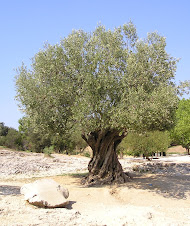
These homes for 40,000 newcomers to Israel were built on land that 86% of which was privately held and confiscated from Palestinian Arabs. A number of Bedouin families have been forced to evacuate from the Negev and relocated in the area that is now the site of a new outpost that settlers hope to expand into a full blown city. The homes for these settlers have been built on a site that surrounds the water access formerly available to the Bedouin families. The ancient olive trees within the settlement have been uprooted from Palestinian farms and replanted within the settlement’s squares to give the impression that these settlements have been a permanent part of the landscape.

In addition to the settlements that are expanding the reach of Jerusalem to the east, there are a number of mini-settlements and compounds growing within Arab East Jerusalem, the suburb next to the Old City that Palestinians have hoped would be the capitol of a Palestinian State in the future. Further complicating life for the residents within East Jerusalem is the presence of a 28 foot tall concrete “Security Barrier.” Rather than separating Jewish and Arab neighborhoods, this wall is situated in a way that separates Arab from Arab neighbors, and cuts off the historic road from Jerusalem to Jericho mentioned by Jesus in the parable of the Good Samaritan.

We also saw the effects of the Israeli policy on home building permits. While Jewish Israelis regularly receive building permits, Arab Israelis and citizens within the West Bank are regularly denied. After waiting years for an unavailable permit, people often go ahead and build on their property, even though the can expect to receive a demolition order. Since 1967, there have been 18,600 demolitions of such homes, and there are currently hundreds of demolition orders placed on other homes and apartment buildings. This is another way the Israeli government is making life hard for Palestinians and encouraging them to leave their ancestral homeland. This policy makes it easier for Jewish settlers to squat on the land and take it over.

If the wall were being built along the Green Line, the accepted boundary according to International Law in 1967, then the wall wouldn’t be twice as long as the boundary line. Instead, the wall cuts deep into the West Bank to claim a significant amount of the most arable land and water resources. Here, like in other places, the wall isn’t about securing Jewish safety within Israel but increasing the process of ethnic transfer and a land grab to make even Arab East Jerusalem a part of a Jewish “Greater Jerusalem,” extending from West Jerusalem to the furthest settlements beyond Ma’ala Adumim. This effectively cuts any future Palestinian state in the West Bank into two cantons, making a two state solution to the conflict that much more difficult to achieve.

Day Eight – Jerusalem, city of peace


We spent today in many parts of Jerusalem. The sheer conglomeration of the city can be too much. History stacks on top of history. The shopping, both among tourists and locals: Christians buying incense. The owner of the coffee shop yelling at his teenage sons upstairs. The women trying on bras over their clothes. The smells, the bells, the prayers in Hebrew, Arabic, Russian, Armenian, and even English. No matter who has sacked the city in the past, the city comes back.

We were walking down an alleyway in the Armenian Quarter after visiting the Wailing Wall, and looking up there was a tree growing out of the side of a building. Life, anew, growing out of the barren sandstone of a building hundreds of years old.

In the streets it was organized chaos. Pilgrims, worshippers, tourists, all walking around, and there we were in the holiest place for multiple religions. People bumping into you as you walk, slippery stones, and yet it was pleasurable and inspiring at the same time. Quite a dichotomy, yet wonderful.

Some of us connected with the holy sites, and others did not. It is hard to fully connect to other people’s faith tradition. For one person, little connection - it was one thing to pray at the Wailing Wall knowing that some of those around you are praying for the destruction of the Dome of the Rock so the Temple can be rebuilt. For another, gratitude in praying - remembering past prayers made there, for a mother who was independent and in good health at the time. For still another, holy site envy – envy for the historicity, impressiveness, and attention given to the sites of others – until he walked into the Church of the Holy Sepulcher for the first time. Then awe. The beauty of the architecture and iconography, the mix and match of the buildings added on over the centuries, and the aromatic prayers breathed in and out of pilgrim’s lungs. We missed the Dome of the Rock, since it was closed because of concern of settler violence.

No matter where one is at the time, going to Jerusalem is an awesome experience. Whether one connects with the layers of history, the shopping, the holy sites, or just people watching, it can take one back to the sacred in a way not experienced in other places.

Monday, October 27, 2008

Goats heads and not so holy gates - Max


Stream of thought here, pitching in while others are out. The tourist industry is just that, an industry. They have it wired to shuffle you through the various religious sites and onto the restaurant that give kickbacks. The "Jesus Boat" took the cake for cheesy, playing the riders national anthem, as if that somehow had something to do with Jesus and the sea of Galilee. They even gave out certificates saying, "you rode this replica of a replica of a boat Jesus might have sailed on," or something like that. Still, I loved the water and the boat. My next favorite comedy of the trip was the chain smoking tour guide for the Church of the nativity. He had learned his shtick at the cafes in France, and translated it into an angry tour guide pointing at Holy sites with a cigarette butt. Third place prize for most absurd is the "wilderness" experience where four hundred tourists are funneled into a narrow parking lot,shuffled like lemmings through a turn style...when for miles in every direction there is actual wilderness with not a soul to interrupt ones spiritual contemplation.

Both the tour of the refugee camp and the tour of Hebron were "real". And while depressing for real reasons, refreshing for our immersion in actual life in the Holy Land. Israel proper is so European and developed the Christian sites often feel about as Holy as riding a fake cable car over the Golden Gate, but old Hebron is alive, even in its death. Fresh goats heads, complete with blood, hair and teeth, resting outside the shop in front of the closed cave like road that should lead to the vegetable market. The steal gate, metal detector and soldiers reminding us that the Grave of Abraham and family is not quite as Holy as we might hope. Then again, the tourist is the outsider here, and the seriously religious the norm, indicating perhaps, that we Christians don't quite share the same theology of space. Recall the response of Jesus to the woman at the well, "One day we will not be concerned about whether to worship God on this mountain or that (on this side of the temple or that) but we will worship in Spirit and in Truth." Maybe, since for Christians the "Kingdom of God is within you" means our "Holy Sites" are doomed to be shallow, or to put it differently, our real Holy sites are to be found deep in the heart of live human beings, in the harvest of olives and the breaking of bread with a farmer and his family.

Day Seven - Hebron


Today, we went to Hebron and met with the Hebron Rehabilitation Committee. This is an NGO that raises funds internationally to rebuild old Hebron. Historically, there was a small Jewish community in Hebron, which both Jews and Muslims mark as the burial place of the Patriarchs and Matriarchs – Abraham, Sarah, and Isaac are entombed inside the historic mosque. There has been conflict between the Jewish and Muslim community here over the ages, with the Jewish landowners leaving their homes. Since 1968, different groups of Jewish Settlers have snuck into the Hebron and established settlements, with an official settlement being established just over the hill. There are five small zones near the heart of Hebron where hard-core settlers have built buildings, even in places without permissions. They are trying to expand these five small settlements, with only 400 settlers, to take over all of the old city. The old school has been transformed into a Sheva. Homes that Palestinians hold deeds to are now in the hands of these settlers. And the mosque has been separated into both a synagogue and a mosque after a Jewish settler opened fire on Muslims praying there a few years. This city of 185,000 Palestinians is being held hostage because of 400 settlers.

There continues to be much conflict between the two groups, despite the presence of over 2,000 IDF soldiers guarding the 400 settlers. There have been instances where settlers have assaulted local Palestinians with the soldiers looking on. While the Christian Peacemaking Team does not have an active presence on the ground, the Ecumenical Accompaniers still remain. Despite all of the harassment and inconvenience, life goes on with vigor in this, the largest city in the West Bank.

Sunday, October 26, 2008

Day Six - additional pictures


We had a "wild and crazy guy" for a tour guide through Bethlehem. We wonder what kind of Saturday Night Live skit they could make with a guide pointing to everything with his cigarette. More pictures from the Refugee Camp.